REPORT
Just 70 kilometres from Poland, the Ukrainian city of Lviv is experiencing an economic boom—and helping shape the enlarged Europe of tomorrow.
In January 2026, a Russian hypersonic ballistic missile struck the city[1]. In March 2026, drones set fire to a building in the UNESCO-listed historic centre[2]. And yet, a few weeks before the first strike, MSC – the world’s largest shipping company – purchased 25% of the Mostyska rail terminal[3], 30 kilometres away. As the Vienna IDM noted during a conference held at Ivan Franko University in Lviv in May 2026: ‘Europe in 2026 is shaped by nostalgia. For Ukraine, enlargement is not a matter of history. It is a strategic choice made under conditions of war’[4].
This statement sums up the fact that Lviv is not waiting for peace to join Europe but is building its European identity amidst the bombs. Indeed, what Lviv is testing today – rebuilding, reindustrialising, integrating displaced people, securing logistics corridors, financing a defence economy – the whole of Europe may need tomorrow.
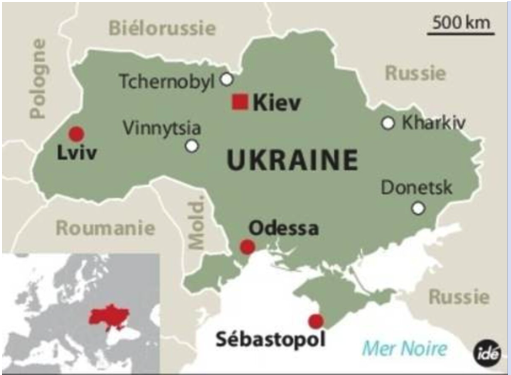
Credits: Mediapart, 2014
The value chain is being reshaped from Lviv Login

EDITORIAL Summer was hot. But as Europe enters a new social and political season, the real heat may only just be beginning. The extreme heatwaves reported this summer have definitely [...]
ANTICIPATION The famous ‘momentum’ that transformed the war in Ukraine into a financial windfall for many European countries will come up against the growing burden of our accumulated debts on [...]
TREND For a long time, luxury has been synonymous with visibility and ostentation. However, in the emerging digital Europe, this logic could gradually be reversed, at least for some. As [...]
VISION Driven by the war in Ukraine and a deep desire for sovereignty, the European space sector is currently experiencing a period of strong momentum. So much so that by [...]
CALENDAR 14–17 September: European Parliament plenary session (Strasbourg) This session and Ursula von der Leyen’s speech are crucial because, from an economic perspective, they will determine Europe’s ability to halt [...]
The recommendations below are the result of a systemic forecasting approach specific to the GEAB. They do not constitute personalised financial advice or investment recommendations. In a context of high [...]
