GEAB 207
EDITORIAL
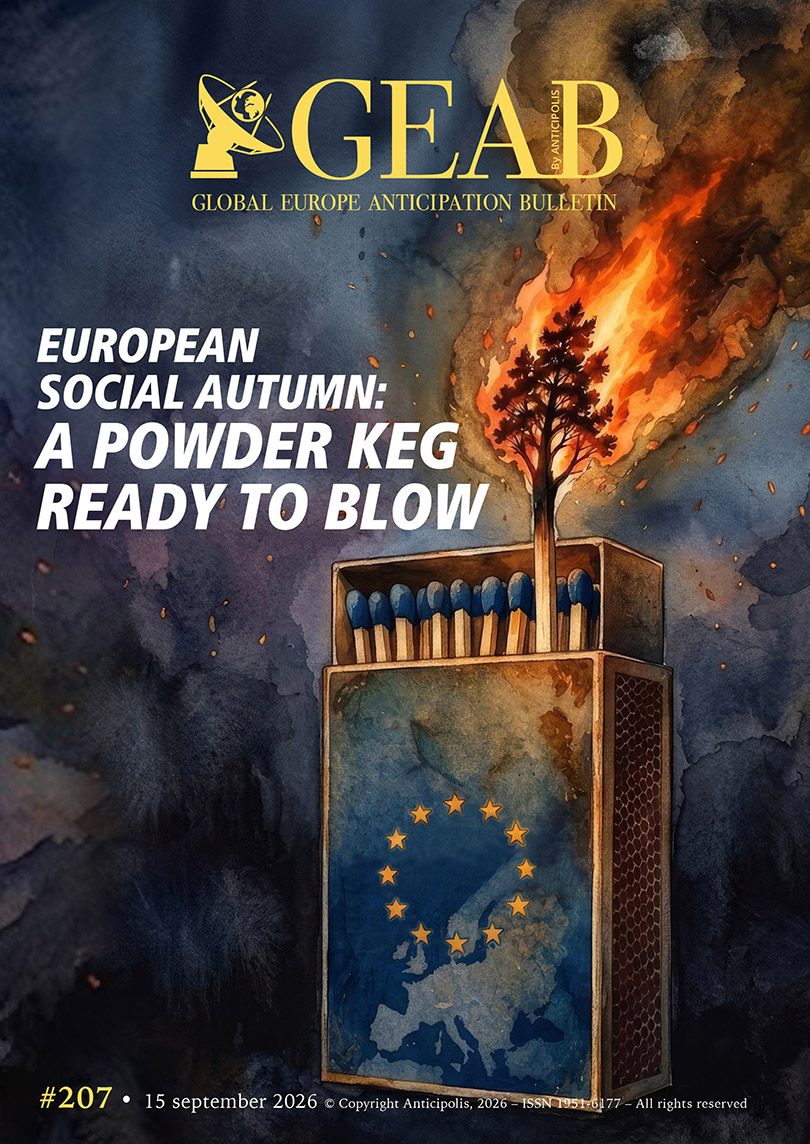
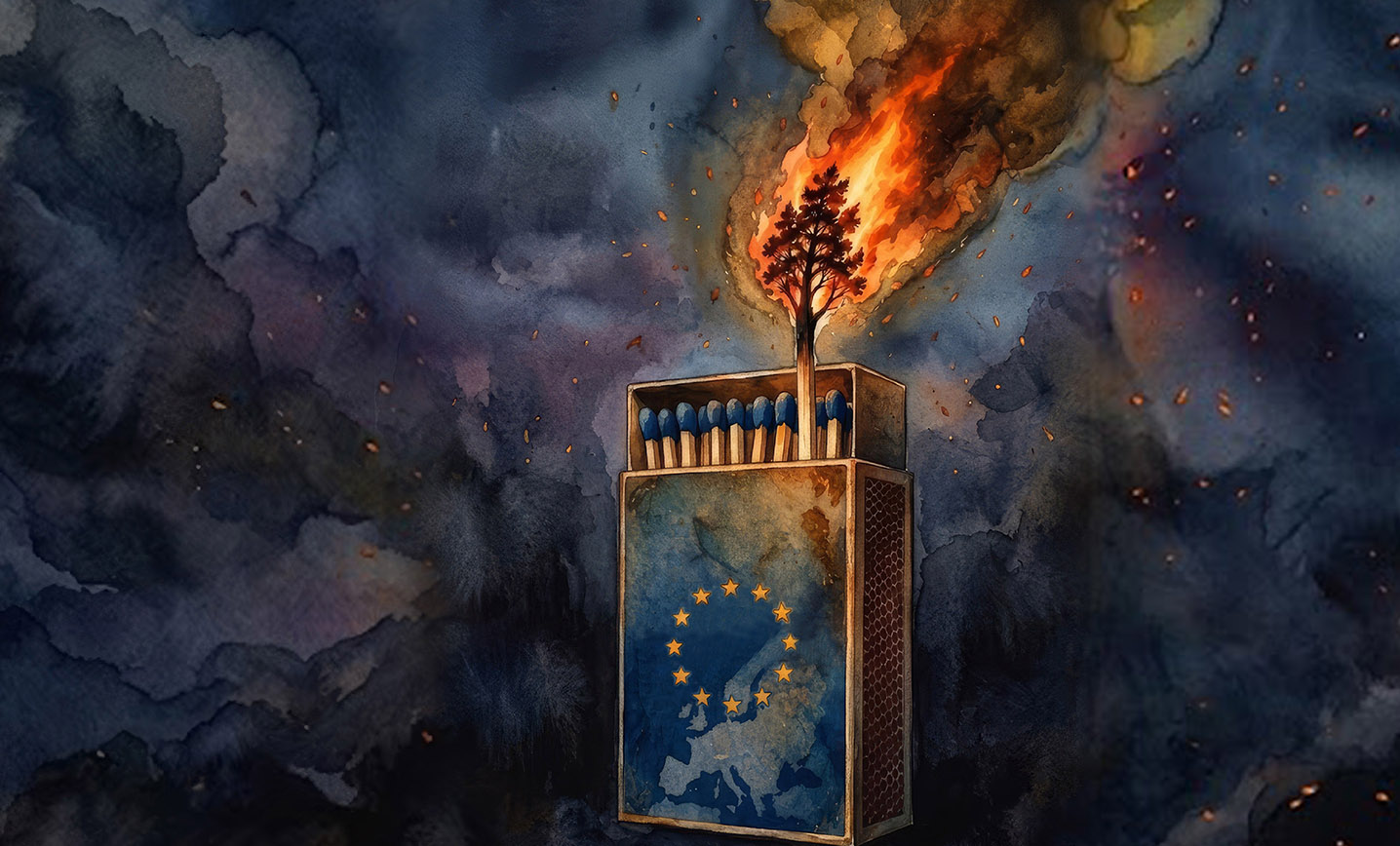
Summer was hot. But as Europe enters a new social and political season, the real heat may only just be beginning.
The extreme heatwaves reported this summer have definitely made climate change harder to ignore, even for the sceptics and the indifferent. Nevertheless, they have also fuelled growing anger towards decision-makers, who now appear more preoccupied with technological competitiveness and militarisation than with the environment.
The summer has therefore deepened the sense among European citizens that they have been abandoned by financial and political elites who seem to inhabit worlds parallel to our own. And that alone is enough to set the stage for a turbulent return to work.
. Loss of productivity as a result of this summer’s heat: the extreme temperatures of 2026 led to significant productivity losses, particularly in construction and agriculture, an estimated 10% drop in output[1];
. A poor tourist season in southern Europe due to transport disruptions, water restrictions and evacuations linked to wildfires, placing a heavy burden on local and national budgets, with direct costs estimated at 10 – 15 billion euros[2];
. Rising inflation across the eurozone, estimated at 3.3% as autumn begins[3];
. A slowdown in growth (around 1.2%) and in employment (0.5%) in the eurozone[4];
. Growing concerns over the sovereign debt of several countries, raising the prospect of soaring borrowing rates and the risk of default – starting with one of the EU’s economic giants, namely France: 3,500 billion euros, or 117.5% of GDP[5], causing rates to soar above 4%[6];
. The economic vulnerability of households, …
The EU is in trouble. It has been in trouble since 2009, buffeted by the winds of a turbulent history, marked by major geopolitical realignments, popular uprisings and hatred, post-colonialist revenges, painful migratory flows, and the emergence of new solutions. The relentless competition between the neighbourhoods of the global village is resulting in an unprecedented form of civil war hitting the European model particularly hard. All the harder because its model of democratic governance was not consolidated in the run-up to this global systemic crisis, despite the fact that its approach had been so clearly anticipated.
The EU therefore lacks the political resources required to weather these violent storms. And the populations are beginning to suffer. And the summer heatwaves serve as a reminder that the major challenges are global in nature and require a world at peace in order to be tackled effectively. Admittedly, these trends are relatively linear, and one might think that Europeans are gradually getting used to them, like frogs in boiling water.
Yet another characteristic, a systemic one this time, is likely to ‘wake up’ Europeans: until the widespread arrival of AI in late 2022, we humans, and Europeans in particular, were held responsible for the climate crisis, for our consumption, our mobility, our shameless wealth, and so on… But for the past few months, a year at most, a new culprit has been emerging with increasing clarity. Data centres, along with the vast physical infrastructure required to sustain the unchecked expansion of technologies whose benefits are becoming increasingly difficult to discern, are beginning to eclipse our own environmental footprint[7].
Whilst it was difficult to be angry with oneself within the previous framework for understanding the climate crisis[8], things are set to take a very different turn now that responsibility is being externalised and directed towards the immense fortunes of the tech sector across the Atlantic.
This tipping point is in line with the return of the human that we identified as a key trend for the next 20 years in our GEAB 201 anniversary issue. It also suggests a return to politics in the militant sense of the term, accompanied by a renewed sense of purpose behind social and environmental demands.
In the United States, tech executives are already being forced to pour ever greater sums into increasingly costly cybersecurity measures[9], while protests are gathering pace against data centres[10].
In Europe, this growing awareness and psychological shift will find solid expression through a number of key dates to note in the calendar of events: on 26 September, Europeans are being called upon to take part in major Climate Marches across the continent[11]. What dynamics will – or will not – emerge from these movements? From 9 to 20 November, COP31 will be held in Antalya (Turkey)[12] : What protests and outcries will surround this summit? (although, conveniently, Erdogan’s Turkey is an ideal host country for containing the crowds).
But the anger will not be directed solely at climate issues, nor will it be confined to the streets, for that matter. And pressure will mount on governments across the EU, adding yet another layer to the mounting pile of challenges they must tackle without the necessary resources.
The time for tough choices is therefore upon us. Not every country will be able to do everything (tackle war, compete technologically, sustain the welfare state, protect the environment…), so European governments will begin to set different priorities. As they do, tensions already visible at the continent’s borders are likely to spill over into the European space itself.
The political agenda at the start of the new political term, and throughout the first half of 2027, offers no shortage of opportunities for realignment. And these could redraw an already fragmented European political map — a map whose broad contours we sketch out in this issue.

Marie-Hélène Caillol,
Editor-in-Chief, co-founder of the GEAB
To access the full issue, please log in or register here
_______________
[2] Source: Biggo Finance, 17/08/2026
[3] Source: European Commission, 1/09/2026
[4] Source: European Commission, 14/08/2026
[5] Sources: Euractiv, 7/09/2026 and Channel STV, 3/09/2026
[6] Source: France24, 3/09/2026
[8] Even though the ‘woke’ political movement can be linked to a form of struggle against ourselves (white people, but ultimately humans as well…), this is entirely consistent with the heavy environmental responsibility that has been placed on the shoulders of young people in particular for the past twenty years or so – and which, in our view, is now coming to an end.
[9] Source: Washington Times, 10/09/2026
[10] Source: NBC News, 9/09/2026
[11] Source: The Connexion, 9/09/2026
[12] Source: Table Briefings, 30/07/2026
ANTICIPATION The famous ‘momentum’ that transformed the war in Ukraine into a financial windfall for many European countries will come up against the growing burden of our accumulated debts on [...]
REPORT Just 70 kilometres from Poland, the Ukrainian city of Lviv is experiencing an economic boom—and helping shape the enlarged Europe of tomorrow. In January 2026, a Russian hypersonic ballistic [...]
TREND For a long time, luxury has been synonymous with visibility and ostentation. However, in the emerging digital Europe, this logic could gradually be reversed, at least for some. As [...]
VISION Driven by the war in Ukraine and a deep desire for sovereignty, the European space sector is currently experiencing a period of strong momentum. So much so that by [...]
CALENDAR 14–17 September: European Parliament plenary session (Strasbourg) This session and Ursula von der Leyen’s speech are crucial because, from an economic perspective, they will determine Europe’s ability to halt [...]
The recommendations below are the result of a systemic forecasting approach specific to the GEAB. They do not constitute personalised financial advice or investment recommendations. In a context of high [...]
