GEAB 205
EDITORIAL
For the past 20 years, we’been observing, analysing and anticipating as best we can the stages of the massive transition from a functional Western-centred world to a functional multipolar world, via a more or less prolonged phase of dysfunction.
Between 2009 and 2014, we thought – or rather hoped – that Europe would play (given its recent history of pacifying a continent composed of a diversity of powerful actors with overlapping interests) the role of facilitator/catalyst for transition by helping the leading representative of the old model (the United States) to positively integrate the new dynamics of global geopolitical reconfiguration (BRICS).
This was to underestimate the paralysis in decision-making within a structure that had, after all, been built by Europeans precisely so that they could play a part in the next major moments of world history…
Thus, from 2014 onwards (the start of the Euro-Russian war), two things began to become clear: on the one hand, without the Europeans, the transition would be much longer and more violent; on the other hand, it would ultimately be the Americans who would be the first to abandon the 20th-century model to take their place in this emerging multipolar world. But they would do so in a very different way from the Europeans, and the resulting multipolar world would, as a result, not be the same.
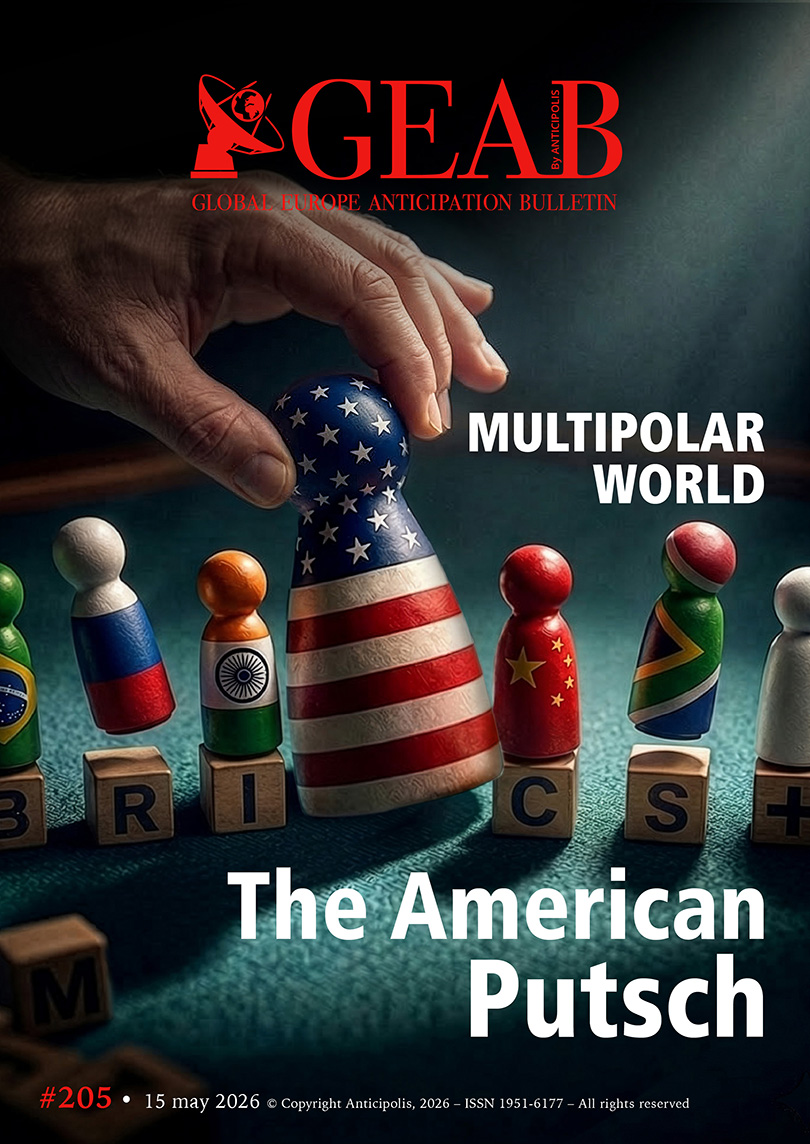
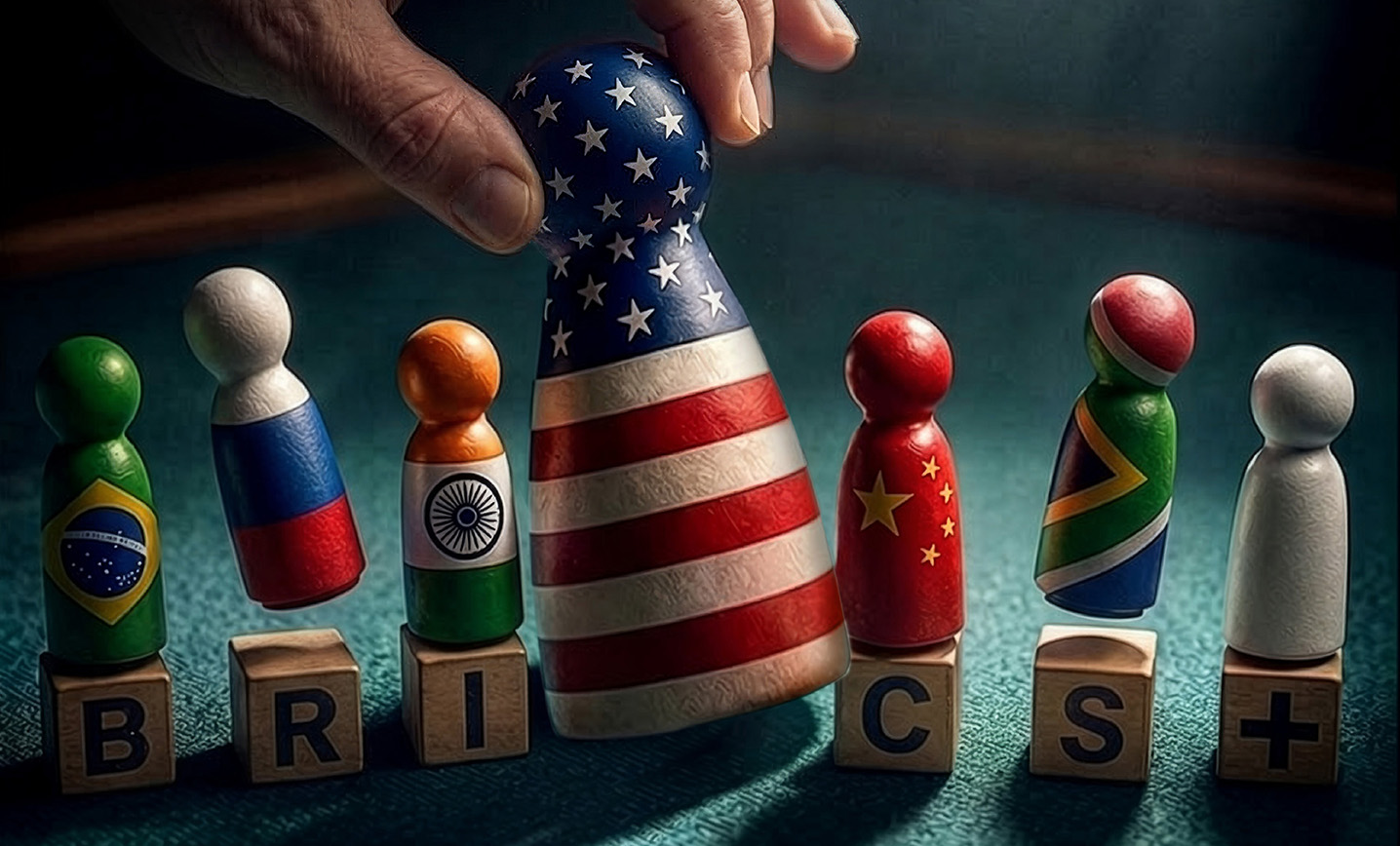
Since Trump came to power in 2016 (with the exception, of course, of the Biden interlude between 2020 and 2024), it is against the backdrop of this anticipation that we analyse the entire foreign policy pursued by this strange American president. And indeed, whereas the Europeans could have supported the BRIC/BRICS/BRICS+ nations – who asked for nothing else – in a joint reform of the rules and institutions of 20th-century multilateralism, Trump’s America, in order to gain greater agility (as the British did by temporarily separating from the EU), is instead shedding its imperial obligations by dismantling, piece by piece, the international straitjacket of alliances (and enmities) and their institutions. It retains from the multipolar world the principle of interdependence as a guarantee of freedom of action, but it strips away all the ‘win-win’ principles originally and carefully laid down by the BRICS, in favour of the very American logic of cut-throat competition.
Its objective: to take its place in the multipolar world as the ‘primus inter pares’[1]. By aiming to be first in the race, the United States is acknowledging that it is no longer the hegemon it was for 60 years; that the world is indeed multipolar; and that it is taking its place ‘among others’. On the other hand, they are using all their current assets of power (the ability to print money, military might, media dominance, technological lead, commercial and diplomatic networks, etc.) to establish themselves as the frontrunners in what they see as a list of competitors: ‘America first’.
Trump’s visit to Beijing is the perfect illustration of this new logic: the US president is visiting the most powerful member of the BRICS+ club (and not the other way round). He is going there to signal that he understands their interests (Taiwan) just as they have understood his (Venezuela), all against the backdrop of the blockage of the Strait of Hormuz, which is reshuffling the cards of the petrodollar system (which has long been under severe strain) and bringing new major players to the fore (Pakistan, etc.), after having made it clear to the Russians that he was washing his hands of their war with Europe, thereby permanently damaging the transatlantic relationship.
As we see in our article on the war in Iran, whilst the United States is profiting from the crisis, it is certainly not alone. Admittedly, US oil and gas exports are soaring and the collapse of the yen is strengthening the dollar. But, on the other hand, China’s trade increased by 14% in April, to everyone’s surprise[2], not to mention Russian hydrocarbons, with a revenue rise of USD 6.3 billion in April compared to the previous year[3], or Pakistan, which is stepping onto the international political stage bolstered by its finally recognised legitimacy as a nuclear power, … whilst a major new institution of the 20th-century international order, OPEC, is imploding following the departure of the Emirates, and one of the most structural ties of the ‘world before’, namely that between the United States and Saudi Arabia, is going up in smoke amid the American president’s verbal excesses directed at Mohammed bin Salman[4]. With an explosion in the number of powerful new players, corridors, roads, pipelines, routes and ports, and a reduction in single-source dependencies, the world is becoming less ‘simple’.
And the United States, by contributing through this war to accelerating the general shift away from the former global hubs that were the Middle East, the GCC, the Strait of Hormuz, …, is becoming an accelerator of this major reconfiguration. Having blown apart the sacrosanct transatlantic relationship, neighbourly ties with Canada and Mexico, and the centrality of the Middle East in energy matters, … the next bomb to explode could well undermine the Japan-US dependency at the heart of the global financial system – as we see in our article on this subject.
Wars, a major financial crisis looming on the horizon, but also the existential crisis caused by AI… the world of tomorrow is certainly being born in great pain.

Marie-Hélène Caillol
Managing editor, co-founder of the GEAB
To access the full issue, please log in or register here
________________
[1] Primus inter pares = first among equals. Source: Wikipedia
[2] Source: Blue News, 9 May 2026
[3] Source: Oil Price, 13/05/2026
[4] Source: House of Saud, 28/03/2026
ANALYSIS Anthony Trad, Geopolitical Analyst Chairman of Stradegy Advisory For over 20 years, the GEAB has been studying the transition from a relatively simple Western-centred world – characterised by [...]
ANTICIPATION If we are correct and Donald Trump’s America is systematically dismantling all the ties paralysing and crushing the United States, preventing it from taking its place as ‘primus inter [...]
AGENDA 14–15 May – BRICS+: new candidates, new challenges The BRICS foreign ministers are meeting on 14 and 15 May 2026 in New Delhi under the Indian presidency, a gathering [...]
EVENT In 2026, Switzerland will assume the chairmanship of the Organisation for Security and Cooperation in Europe (OSCE) for the third time – following 1996 and 2014. This term of [...]
VISION I was sixteen. It was December 1983. WarGames had just come out. I saw it back then, as a teenager, and something took root inside me. A fascination with [...]
Disclaimer: The recommendations below are the result of a systemic anticipation approach specific to the GEAB. They do not represent personalised financial advice or investment incentives. In a context of [...]
