VISION
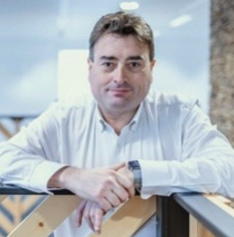
I was sixteen.
It was December 1983. WarGames had just come out. I saw it back then, as a teenager, and something took root inside me. A fascination with computers, a vague desire to understand these new machines that were beginning to find their way into homes and into the collective imagination. For those who haven’t seen the film, imagine this: an American teenager, passionate about computers, accidentally logs into a military computer. He thinks he’s found a game. In reality, he’s communicating with the WOPR, a machine tasked with simulating nuclear war scenarios for the US military. The WOPR doesn’t really understand the difference between a simulation and a real war. It plays, but its game could trigger the end of the world.
And then there was that moment:
Shall we play a game?
A simple sentence, written on a screen. A machine that speaks. An intelligence that suggests a game.
Today, with chatbots, it seems almost commonplace. You type a sentence, a machine replies. But back then, for a teenager, there was something magical and unsettling about that scene. The computer was no longer just a tool. It was becoming a conversation partner. It had a presence. It wasn’t merely running a programme; it seemed to be entering into a relationship. Then there was Professor Falken, the system’s original creator. A scientist withdrawn from the world, somewhat disillusioned, who realised that his machine could keep playing whilst humans would pay the real price of the game. In the end, WOPR must be taught that some games have no winner.
The machine simulates all possible outcomes of a nuclear war and eventually concludes:
Login
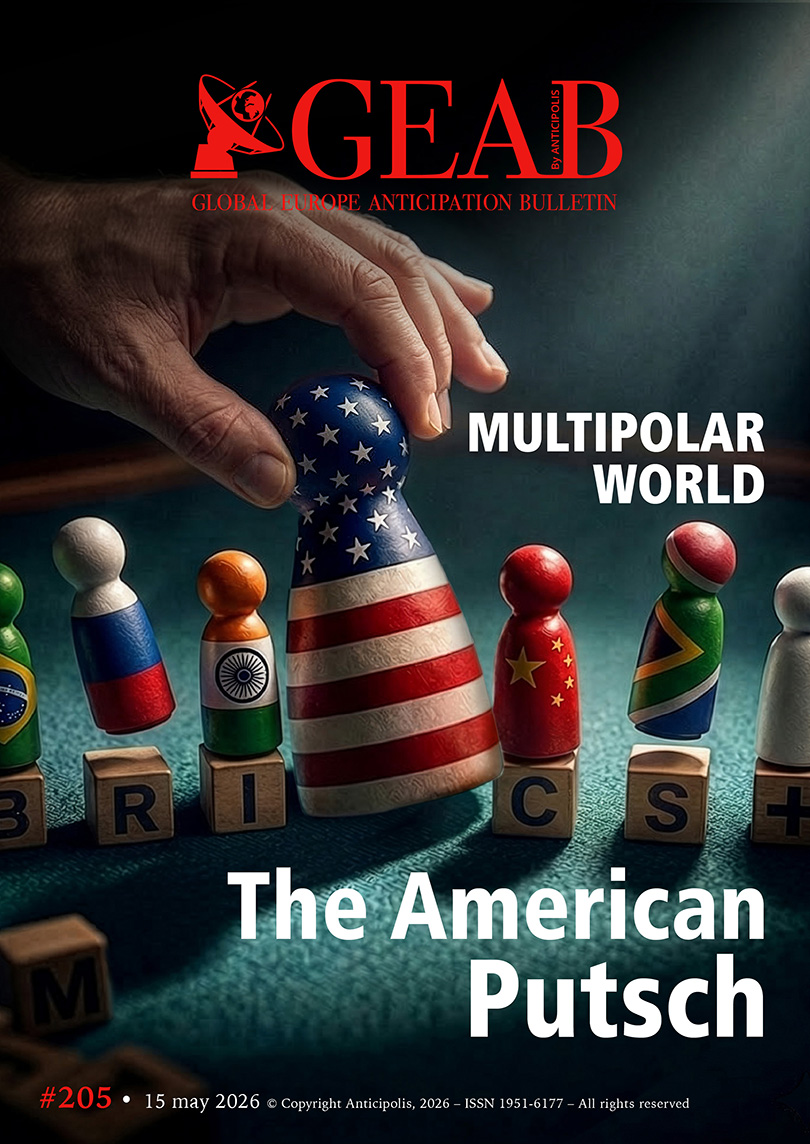
EDITORIAL For the past 20 years, we'been observing, analysing and anticipating as best we can the stages of the massive transition from a functional Western-centred world to a functional multipolar [...]
ANALYSIS Anthony Trad, Geopolitical Analyst Chairman of Stradegy Advisory For over 20 years, the GEAB has been studying the transition from a relatively simple Western-centred world – characterised by [...]
ANTICIPATION If we are correct and Donald Trump’s America is systematically dismantling all the ties paralysing and crushing the United States, preventing it from taking its place as ‘primus inter [...]
AGENDA 14–15 May – BRICS+: new candidates, new challenges The BRICS foreign ministers are meeting on 14 and 15 May 2026 in New Delhi under the Indian presidency, a gathering [...]
EVENT In 2026, Switzerland will assume the chairmanship of the Organisation for Security and Cooperation in Europe (OSCE) for the third time – following 1996 and 2014. This term of [...]
Disclaimer: The recommendations below are the result of a systemic anticipation approach specific to the GEAB. They do not represent personalised financial advice or investment incentives. In a context of [...]
