ALERT
In less than a century, the international peace architecture has shifted from a universal project of global regulation to a politically paralysed and financially strangled structure. By the end of 2025, the glass tower[1] had a record $1.6 billion in unpaid contributions, whereas a third of its member states no longer regularly meet their financial obligations[2], having lost faith in the effectiveness of this “thing”.
Without a fundamental reform of its funding and decision-making mechanisms (a long-standing issue dating back several decades[3], as its charter and functioning have never been significantly changed and have always reflected the world order shaped by the Western powers following the Second World War), the UN will soon be merely surviving, incapable of launching new ambitious operations on its own without external co-financing, whether public or private. In other words, without a fundamental overhaul, it will no longer lead, but merely support. Yet who will ensure international peace and stability when the traditional multilateral mechanisms inherited from the 20th century cease, de facto, to function?
Login
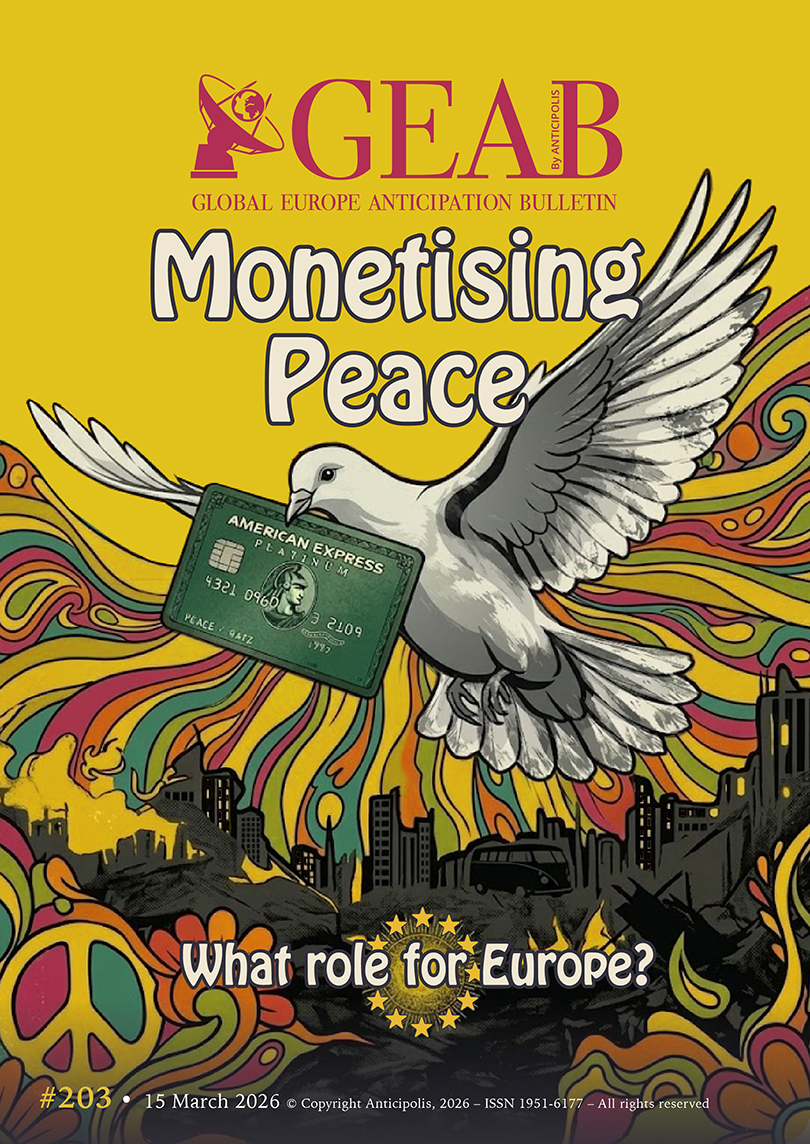
EDITORIAL The phase of Permanent Systemic War we identified in January as the next stage of the Global Systemic Crisis, has already been confirmed. Contrary to the intentions of the [...]
ANTICIPATION The “Board of Peace” (BoP), announced with great fanfare by Donald Trump on 22 January in Davos, illustrates the emergence of a market that is particularly attractive to the [...]
CALENDAR 15 March - Vietnamese National Assembly elections In a spirit of transparency and public engagement, Ms Nguyen Thi Thanh, Vice-President of the National Assembly, and Ms Vu Viet Trang, [...]
EXPLORACTION Since the theme of this issue is the monetisation of concepts – peace, in this case – the communal experience of The Burning Man in Black Rock City strikes [...]
Disclaimer: The recommendations below are the result of a systemic anticipation approach specific to the GEAB. They do not represent personalised financial advice or investment incentives. In a context of [...]
