Category: Magazine

EDITORIAL Every generation believes it can command time, until reality laughs back. Today, that laughter is bitter, carried by endless wars, chaotic diplomacy and provocations hurled like confetti in a tempest. In modern factories, millions of fly-drones roll off the assembly lines to test an adversary’s resilience, making 21st-century low-cost warfare no longer a matter […]

ACTION In the context of a global systemic crisis causing the collapse of absolutely all societal fundamentals, the first reaction is the hardening of all power structures faced with a crisis of legitimacy resulting from their inability to adapt to new challenges on the one hand, and the emergence of countless alternative proposals on the […]

VISION It is the hypothesis of a shift to a state of Permanent Systemic War that allows us to anticipate a return of the human. Indeed, the fragility of the administrative and governance superstructure linked to this state, by reducing the vertical dependence of individuals and forcing them to be resilient, will give power back […]

ANTICIPATION It won’t be the climate that forces us to become resilient, war will. After 20 years marked by the Global Systemic Crisis, we anticipate that 2026 will mark a shift into a new period of at least 20 years (a generation) of Permanent Systemic War. This new norm will be the most characteristic and […]

TREND In 2009, in his book “World Crisis”, Franck Biancheri stated: “Our relationship with the future has fundamentally changed in fifty years […] the future now influences the present of our societies as much as the past”. The idea was that decisions were once primarily driven by references to the past, habits, or traditions. This […]

OVERVIEW We could not forgo our long-awaited January panorama of the year’s trends, anchored in our hypothesis of the official inauguration of Permanent Systemic War. The return of humanity is still discreet. We therefore focus mainly on empires, surveillance, the widening of all inequalities, the relegation of humanity to the background, and wars, of course. […]
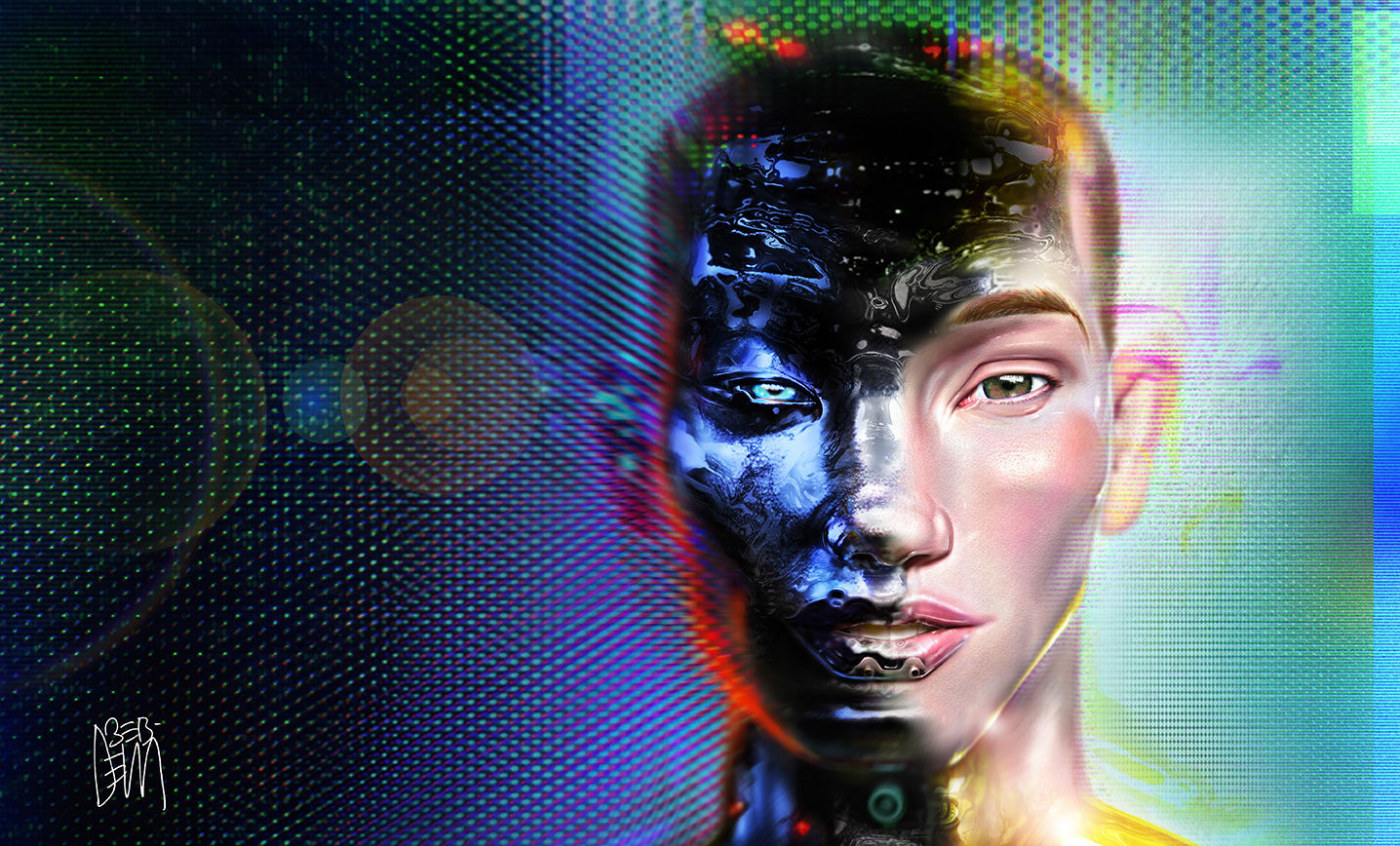
EDITORIAL Precisely 20 years ago, the European Laboratory for Political Anticipation (LEAP2020) released the first issue of an unconventional UFO-like magazine, the Global Europe Anticipation Bulletin. Why “unconventional”? Because at the time, the Internet was disseminating a wealth of high-quality content completely free of charge. Because LEAP was an independent think tank with no support […]

Disclaimer: The recommendations below are the result of a systemic anticipation approach specific to the GEAB. They do not represent personalised financial advice or investment incentives. In a context of high volatility and global transition, all investors are solely responsible for their decisions We recommend cross-checking these analyses with other sources and, if necessary, consulting a […]
WEAK SIGNALS When discussing the future of European fashion, one fact is immediately clear: our wardrobes will never again be mere collections of colorful fabrics. By 2040, what we wear will increasingly serve as a civilizational manifesto. Clothing will speak less about our individual identities and more about the kind of world we have collectively […]
EVALUATION 2025 – A year of very promising anticipatory lines As every December, this exercise is not about playing fortune tellers, but about assessing how far the real world, which moves forward without asking for our opinion, has confirmed or not the main trends we identified last January. And in 2025, it must be said, […]
TREND The fashion industry has experienced its share of disruption, but until recently, this was still the preserve of European companies. Sweden’s H&M, Spain’s Mango and Zara (above all) invented fast fashion and knocked the former French and Italian masters of the industry off their perch. It is therefore not surprising that Shein’s arrival in […]
ANTICIPATION Europe, the Middle East, Australia, South Korea… within this highly competitive multipolar world, many medium-sized space powers are becoming major players. Alongside the new age of aeronautics (drones), digital technology (AI, cyber, quantum) and marine technology, Space is one of the four key areas of sovereignty for the coming decades. And, after taking their […]

EDITORIAL By failing to broker a peace agreement between Ukraine and Russia at the beginning of the year, and lacking the means to enable Ukraine to prevail militarily, Europe has added yet another year to its own decline, as well as to the suffering of the war’s victims. The opportunity we saw in March[1] to […]
INVESTMENT RECOMMENDATIONS United States: Will the elastic snap? For a long time, the elastic has been stretched between a country in great social and economic distress on the one hand and a real global power on the other. During his first term, Donald Trump gave the impression of wanting to prioritise the country over its […]
TECHNICAL RECOMMENDATIONS For AI to become a tool for stabilisation rather than a catalyst for crisis, certain conditions, some of which are difficult to meet, must be fulfilled. Diversification, redundancy and model mixing Some economists, such as Tyler Cowen (Mercatus Centre), believe that the solution is not to limit AI but to diversify its use. […]
ANTICIPATION As artificial intelligence models become increasingly prevalent in risk management, finance is undergoing a transformation and prediction, once a factor of control, is becoming a source of instability. By 2030, regulators could entrust collective algorithmic architectures with the task of “stabilising” markets, at the cost of a loss of human understanding. This shift towards […]
WEAK SIGNALS This Next Gen’ section is produced in partnership with A l’Aube du Futur Electing a head of state through a platform once designed merely for gamers to chat: what seemed, until recently, a science-fiction scenario—apocalyptic to some, utopian to others—is now our political reality. On 10 September, Nepalese citizens ended several days of […]
TREND As the UN approaches its 80th anniversary, the international scene has shifted from a regulated order to a reign of force, with 61 conflicts involving 36 states – an unprecedented peak since its inception in 1945[1]. Caught between a veto crisis and a budget crisis, the Organisation is struggling to halt the escalation, while […]