Logically, the international governance invented by the West after two world wars to create the conditions for peace was based on the defence of weak players (Palestinians, Armenians, Saharawis, etc.) against strong players (Israel, Azerbaijan, Morocco, etc.). It is morally undeniable that a peace system is designed to curb the expansionist ambitions of those who have the means to fulfil their ideals. But every system has its limits.
By denying the victories of the strong without giving the weak what they want, this principle has had the disadvantage of perpetuating situations of conflict that have blocked the future prospects of entire regions. These regions are now determined to see history take its course again.
The emergence of new geopolitical players around the world is creating the conditions for new avenues of resolution. Unfortunately, these will probably go through a stage of endorsing the demands of the strong (the logic of war) before securing the situation of the weak (the creation of a new framework for global governance).
And that’s where we are, as current events show. This month we look at the latest.
Israel-Palestine: The ‘war to end all wars’?
Our readers remember the optimism with which we have observed the great changes that have taken place in the Middle East over the last six years[1]. In the light of recent events in the region[2], the question is: were we wrong?
The most attentive of our readers will have read in the GEAB that the great peace advances of recent years have been made possible only by side-stepping the Palestinian issue, but that this question would inevitably return to the table at the end of the process.
So while we are deeply saddened, we are not overly surprised by the escalation of violence between Israel and Hamas. What are the lines for a quick and, hopefully, final resolution of this decades-old conflict?
. We no longer speak of the Israeli-Palestinian conflict, but of the ‘Israel-Hamas war’;
. From the Western point of view, Israel has gone from coloniser to victim;
. But, the Israeli public is rife with accusations of territorial dispossession by the far-right government[3], which partly explains the upsurge in violence[4];
. On the Arab-Muslim side, there is, of course, a reflex of support for the Palestinians, but the extreme violence of the acts committed nevertheless raises questions for the majority of centrist opinion[5].
Let us also recall the diplomatic context in which this war took place:
. In 2021, the Abraham Accords formalised the de-facto recognition of the State of Israel by several Muslim countries (United Arab Emirates, Bahrain – with a Shiite majority, Sudan and Morocco)[6];
. In Iran, the Mullahs’ regime has been facing an existential crisis for several months, forcing it to evolve[7];
. Under Chinese auspices, an agreement was signed last March between Iran and Saudi Arabia[8] (as well as their joint participation in the expanded BRICS group since August);[9]
. Europe, Russia and the United States are busy in Ukraine;
. Turkey is involved in the Nagorno-Karabakh crisis[10].
As a result, the major regional players (Israel, Saudi Arabia, Iran) have a relatively free hand to deal directly with the situation themselves. What are their common objectives?
. Building peace: there is no doubt that this is the strategy pursued by Israel, the UAE, Saudi Arabia, etc. (led in particular by Netanyahu’s Arab diplomacy[11], by Mohammed Ben Salman’s Vision 2030[12], approved by Trump as of 2017[13] and which has led to the fine successes mentioned above: the Abraham agreements, the authorisation given to Iran and Saudi Arabia to move closer together, etc.);
. Getting rid of the militias from the previous period (Hamas, Hezbollah), which block any hope of peace and are now serve the interests of their creators rather than those of the people who created them.
What could their differences be?
. Has Israel been duped, and will the recent Saudi-Iranian rapprochement lead to its expulsion from the region?… and at the same time the expulsion that of Lebanon’s Christian minorities? And when will there be peace in the region as a result?
. Or has all the diplomacy conducted since 2017 integrated Israel into the region, acknowledged the multi-faith nature of the Middle East and created the framework for cooperation between the three regional powers (Israel, Saudi Arabia and Iran) to bring about genuine regional peace in the 21st century (as the Europeans did after World War II)?
As you may have guessed, we have no hesitation in betting on the second option; however, the religious minorities in the region will have to be reassured on the first point. Consequently, the axes for a rapid and definitive resolution of the Israeli-Palestinian conflict that emerge as a result of the Hamas attack are as follows:
. Saudi Arabia and Iran are playing “good cop, bad cop” in defence of the Palestinian cause (more so than Hamas)[14], demanding negotiations with Israel and taking the place of the discredited Hamas in these negotiations.
The demand: the creation of a Palestinian state. Israeli public opinion on the right does not want a Greater Israel that would turn it into a country with a Muslim majority; public opinion on the left and in the centre believes that the oppression of the Palestinians must stop if peace is to be achieved. Arab public opinion supports the Palestinians but not Hamas/Hezbollah[15]. The conditions are ripe for an agreement.
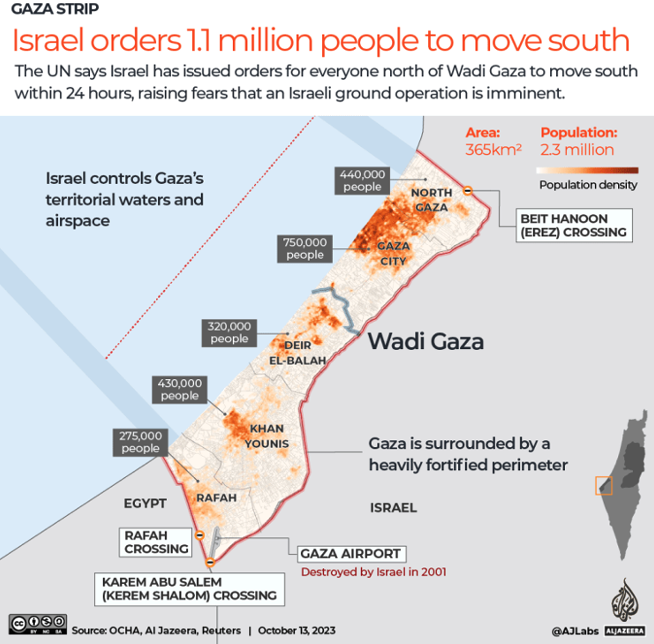
Figure 1: The Israeli army has ordered the evacuation of more than a million people from the north of the Gaza Strip to the south within 24 hours. Aljazeera map.
. Hamas has been marginalised, the Gazans have been expelled[16] and with no hope of returning since their city was destroyed, and the Gaza Strip has been emptied of its population, who have emigrated to Saudi Arabia and Egypt to build the pharaonic projects in the region[17] – or to the new Palestinian state.
. The Lebanese Hezbollah, probably prevented from reacting decisively because of its weak political legitimacy[18] and the weakening of Iran’s support for it[19], is also losing what credibility it had left as a defender of the Palestinian cause.
. Iran sees this crisis as an opportunity to transform itself and adapt to the new realities of the region.
. Netanyahu’s ultra-right government was dissolved at the end of the war, and democracy resumed its course in Israel and throughout the region[20]… What about Netanyahu himself, the de facto co-strategist of the peace plan?…
The question, therefore, is whether Israel, Saudi Arabia and Iran are really aligned in their objectives. If they are, they will be the ones directly taking over the resolution of the Israeli-Muslim conflict from the Hamas/Hezbollah militias and/or powers from outside the region. This is exactly what the Middle East needs if it is to establish itself as the centre of world monotheism and invent the inter-religious peace that the 21st century needs as much as the 20th century needed inter-national peace after the two world wars. Of course, we may be wrong; or we may be right, but the strategy fails because of the interference of infra- or extra-regional players with interests other than peace.
One thing is certain: while the current war between Israel and Hamas may be a real “last of all wars”, laying the foundations for a new form of regional integration – that of the Middle East; Europe, on the other hand, is once again in serious danger: Arab and Judeo-Christian populations, disconnected from the realities on the ground, are becoming more radical and risk clashing, fanning the flames of extremism (far-right, Islamism, etc.), which have at their fingertips the weapons we sent to Ukraine and which have returned via mafia networks to the continent[21]. Right from the start of the war in Ukraine, we anticipated the risk of terrorism returning to Europe. All that was needed was a spark. Here it is.
After the Middle East, the road to African emancipation
The withdrawal of French troops from Mali in September 2022 should mark the “crowning” of France’s defeats in Africa[22]. Since then, France has been forced to withdraw its troops from Burkina-Faso (February 2023)[23] and most recently from Niger (announced by Emmanuel Macron on 24 September). Other European contingents supporting the French military are also in the process of withdrawing (notably the German forces in Mali and a possible withdrawal from Niger[24] ). It is also likely that France will soon withdraw from the other African countries where it still has military bases: Gabon, Senegal, Côte d’Ivoire (3 countries where it has already reduced its numbers)[25] and Chad[26].
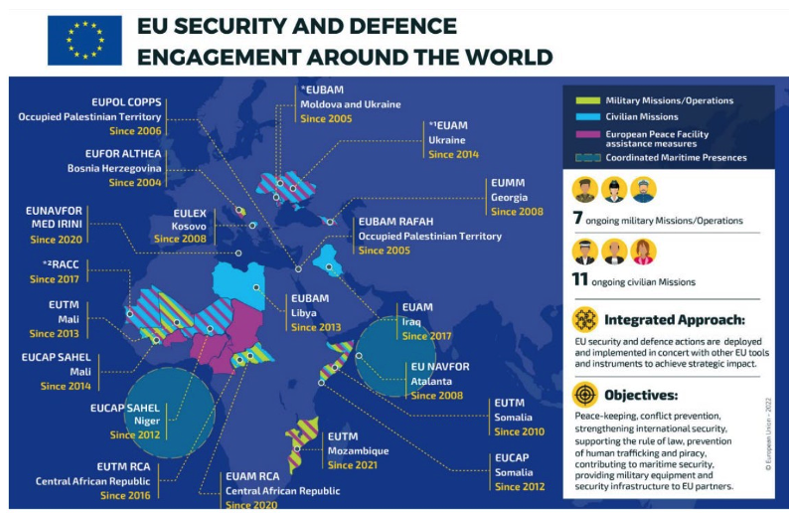
Figure 2: European intervention forces around the world. Source: EU Diplomatic Service
If this is a “defeat” for France, it is also a “defeat” for the European Union and all its missionary policies under the European Common Security and Defence Policy (CSDP)[27], a remnant of the model of international organisations set up at the end of the First and Second World Wars by the Western powers (USA/Europe). Powers that have mainly opted for “military” operations by sending troops (including blue helmets) to intervene directly in conflicts, the very nature of which is anachronistic with the “peace and democratisation” missions they claim to defend. The withdrawal from Niger sounds a little like the withdrawal of American troops from Afghanistan[28], the end of a world. “I have seen the end of the old world”, said one officer on hearing of the French President’s decision[29]; the end of the “old world” we say, hoping that these signs are the last stirrings of a world that is freeing itself from these powers and embracing the reality of a multipolar world.
On the positive side for Europe, however, if the EU loses its vocation for military intervention (some would say interference), NATO could take advantage of this to take on a new role in line with its multipolar ambitions, extending to the Asian, Pacific and African continents[30]…
There is no shortage of arms suppliers and traffickers to African countries, who also supply the forces behind the coup. While Africans need these weapons, the major Western powers are no longer the only suppliers. Of course, the United States and France remain the main suppliers, but they are challenged by Russia[31] (which has overtaken the United States in terms of arms exports to Africa, even though the market has been shrinking since 2022, with Russia needing its own production for its war in Ukraine), China, but also Turkey (with its drone armies) and Israel[32], not to mention all the abandoned theatres of Western wars, such as Afghanistan, the Balkans, Syria, Iraq, Libya, etc., and as we have already mentioned, Ukraine[33], all of which feed into Africa.
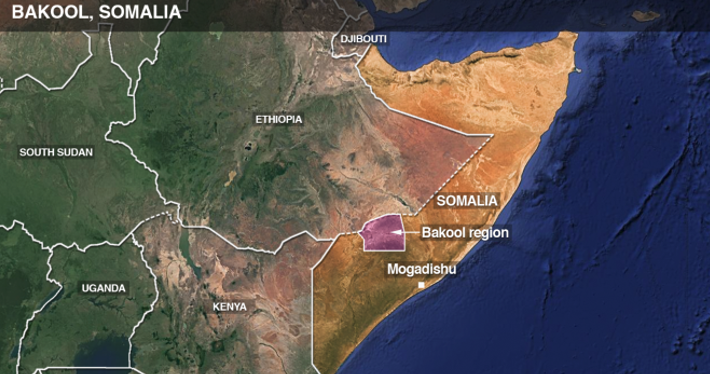
Figure 3: Location of the attack on the convoy of Ethiopian peacekeepers on the Ethiopia/Somalia border. Source: VOA News
If Africans “need” these weapons, they do not need foreign soldiers and intervention forces on their soil, whatever their mission or origin. Attacks on convoys of peacekeepers, including those hired by the African Union, are on the increase: Democratic Republic of Congo, Central African Republic, Sudan, etc. Recently, Al-Shabab militias in Somalia attacked a convoy of Ethiopian peacekeepers, their neighbours, but enemies nonetheless[34].
The first step, therefore, which consists in getting rid of external military intervention forces, is certainly no guarantee against the paramilitary (and/or terrorist) militias that have been sweeping across the continent since they were more or less expelled from the Middle East (Islamic State and Al-Qaeda). Despite their differences and rivalries, they are reinforcing the anti-Western ranks of Boko-Haram, fuelled by the operations of the notorious Wagner group, a Russian free electron who returned to the fold after the death of its leader Yevgeny Prigozhin, in a plane crash last August. Today, they are returning to Russia with all their baggage and arms, abandoning their sulphurous cooperation[35].
There has been a growing awareness that the future of the African continent belongs to Africa since the end of apartheid in South Africa. The African Union is increasingly taking its place in the multipolar world, through South Africa’s participation in the BRICS, and is now called upon to take part in various international bodies (G20, IMF, Arab League, BRICS, etc.), and is now assuming the role of peacemaker on its continent (AU blue helmet), bearing in mind that it must also manage the 80% of African migrants who move to and stay on the continent (not Europe)[36].
With Europe, Russia and the United States busy in Ukraine, and the Middle East focused on the challenge of making its peace project a success, Africa can now work on pacifying its continent.
Ukraine 2024-2025: A multipolar peace taking shape without Western involvement
The Russian-Ukrainian war, with its echoes of the Cold War between the West and Russia (even if it is a hot war), may have led some to think that history is endlessly repeating itself. However, our team anticipates that the outcome of the conflict will be very different from that of the Cold War, or even from that of the end of the Ukrainian crisis in 2014: in fact, we anticipate that neither the EU nor the United States will be the main players in the peace process.
Long-term strategies are now becoming clearer, and the effects of twenty months of heavy fighting are being felt: the United States is sticking to a hard-line vision of the conflict, unable to envisage negotiations with Russia, and internal political divisions are tending to export the burden of the war to the European states.
The European Union, particularly in the person of the President of the Commission, is following this line without changing course, promising full support and even unrealistic integration of Ukraine into the European Union, and without considering peace negotiations with Russia, although it is already talking about reconstruction[37]. This radical position highlights the gaps in solidarity between Member States, which makes this strategy ineffective.
The Ukrainian people, aware of this situation, will lose confidence in their European ally and its untenable promises. Tired of a conflict that is costing them dearly and of the “theatrical” posturing of their President, they will be the first to give up on the West when they realise that the serious prospects for peace lie with the multipolar world.
For the time being, Saudi Arabia is the country best placed to take on the role of mediator and organise peace negotiations between Ukraine and Russia, with the support of the Global South. A brief review:
A mired conflict
First, a brief update on the progress of the conflict. The conflict has clearly become bogged down, punctuated by Russian offensives[38] and Ukrainian counter-offensives[39]. After almost two years of war, neither side is gaining the upper hand. The Ukrainian army, supported financially and militarily by the Western camp, with an arsenal of equipment (tanks, drones, planes[40]…), weapons and ammunition, has held up much better than anyone could have predicted. On the other hand, Russia, whether unwilling or unable, remains confined to the east (the Donbass region and Crimea), even though it regularly bombs towns such as Kiev, Lviv and Odessa, which remain outside its battlefield. There is little reason to believe that this situation could swing one way or the other in the short term. The strategic advantages gained by the Russians are not being exploited as aggressively as possible, and the Ukrainian resistance is not yet showing any obvious signs of weakness.
In this situation, it is difficult to imagine an outcome to the conflict other than through negotiations. Since no one is in a position to dominate the other in a brutal and definitive way, the only chance to imagine an end to the fighting is through talks.
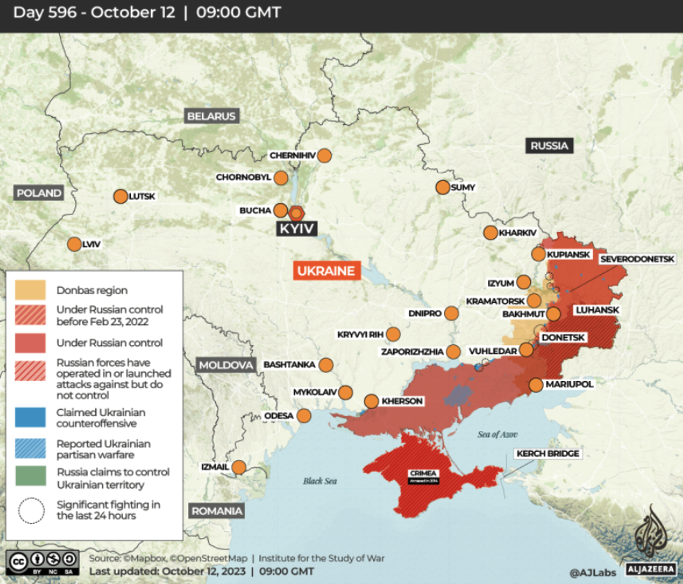
Figure 4 – Daily monitoring of the conflict in Ukraine on 12 October. Source: Al Jazeera
A West full of doubts and divisions
Let’s now look at the forces which are not directly involved. The United States, which is doubly committed, both in its own name and through NATO, has chosen to adopt a strategy of unconditional support for Ukraine, but a Ukraine at war. The aim is not to find a way out of the conflict, but to give Ukraine the means to resist its invader, even if it takes years[41]. The reason is more pragmatic than the symbol of Russia’s historic enemy: the US administration considers that financial and arms support for Ukraine brings in more than it costs[42]. Some politicians do not even hesitate to defend this vision publicly in order to convince their voters[43]. The United States has succeeded in Ukraine where it failed in Iraq or Afghanistan: in maintaining its arms industry so that it can use these weapons against its designated enemies (Russia and, indirectly, China), without committing its troops. Feeding the military industry serves, incidentally, a broader objective: the re-industrialisation of the United States, undertaken by Trump and pursued by Biden, to keep pace with China[44].
Nevertheless, there are strong divisions within the American political establishment and support for Ukraine is not unanimous[45], forcing the Biden administration to disguise financial aid to Ukraine as aid to Israel[46]. While the US military industry will never be stopped, regardless of which party is in power, financial support for it can be questioned. In this situation, the institutions of the European Union have volunteered to fill the gap. The Commission’s support is always unconditional, whether embodied by its President[47] or its head of diplomacy, Josep Borrell[48]. If the bulk of the financial support, in other words the burden of supporting Ukraine, were to fall on the shoulders of the EU, it would be all the more beneficial for the United States.
But there are also divisions in Europe that will be even more obstructive than in the United States. First of all, there is the financial burden that unconditional aid to Ukraine places on the Member States and therefore on European citizens. Each European country supports its own arms production industry (which is not necessarily as profitable as the American arms industry) and supplies it to Ukraine. The huge European funds deployed for aid to Ukraine are also putting a strain on governments and civil society, which are already financially and economically weakened and less and less inclined to support an endless war[49]. To date, since the start of the war, the EU and its Member States have provided Ukraine with over €77 billion in aid[50].
Another grain of sand in the spiral is Poland. This border country has gone from being Ukraine’s first supporter to being Europe’s first victim of the conflict[51]. The main reason for this is economic: since the Russian invasion, Ukrainian cereal exports have passed directly through Poland, destabilising Polish and then European market prices, as Ukrainian agricultural produce is cheaper. As a result, tensions persist between Member States on this issue, and Poland (but also Slovakia, Hungary, Romania and Bulgaria), unable to make its voice heard, is increasingly tempted to defend its interests alone. At the end of September, Poland announced that it would stop supplying arms to Ukraine[52]. At the time of publishing, general elections are being held in Poland. According to the latest polls, the conservative party (PiS) was in the lead. The results would, however, give the opposition a majority. But even in the event of a victory for the pro-European party (KO), we anticipate that the political weight of farmers will carry just as much weight. A similar situation exists in Slovakia, where pro-Russian populist Robert Fico has just been elected[53].
Another major stumbling block is Franco-German understanding, which is not at its best and is unable to adopt common positions, particularly on defence issues[54]. The European institutions are set up in such a way that if the Member States do not agree on foreign and defence policy, particularly the French and Germans, it is impossible to put in place an effective strategy. Unconditional EU support for Ukraine to replace the United States in the long term therefore seems unlikely.
As a result, Ukraine’s integration into the EU seems rather hypothetical, as it would have to be supported by all Member States. It is true that the President of the European Commission, Ursula von der Leyen, mentioned in her State of the Union speech (13 September) that she wanted to prepare a Europe of thirty[55] in 2030, suggested Charles Michel, President of the European Council, and the European Foreign Ministers who travelled to Kiev on 2 October showed their support for Ukraine[56]. The question of enlargement was raised in Granada during the last European summit, without a real answer (postponed to the December summit) and raising numerous questions about the timetable (2030 was not mentioned), the method of enlargement and above all the need to reform (reinvent) the EU[57].
When Ukraine lets go of the West
The Ukrainian people are beginning to realise this. In the medium term, the country will experience the paradoxes that the EU can embody: the Commission openly defending a cause to which the Member States are not unanimously committed. From our team’s point of view, the tipping point could come as early as the next elections, scheduled for the end of March 2024, whether or not they actually take place. For the moment, the first signs are visible in the Ukrainian press, accompanied by virulent criticism of President Zelenski, who is judged to be too “theatrical”[58].
The Ukrainians are, not surprisingly, suffering very heavy losses[59], which will eventually become “unbearable”, in the words of a French diplomat[60]. We therefore anticipate that Ukraine will abandon the West before the West abandons Ukraine. Like some political figures in Serbia[61], Ukraine may turn to the BRICS to satisfy its desire for peace, when it realises that EU integration and support are doomed to failure.
Who will be the new peacemakers?
This is, in any case, the crux of our anticipation: peace cannot be negotiated by either the United States or the European Union. For all the reasons outlined above, the West is directly involved in the conflict and therefore cannot appear to be a credible mediator[62]. On the other side of the world, the same can be said of China. It has tried to keep enough distance from the conflict to present itself as a potential mediator, but not enough to take on the role credibly[63], at least not on its own.
The most successful attempt so far was made by Saudi Arabia in August, when it brought together various national representatives, including Ukrainians, but did not invite the Russians[64]. This key country, which has begun a pivot towards China and the BRICS without definitively cutting its ties with the United States, could be best placed, with the support of the Global South, to bring together all the relevant and legitimate countries around the negotiating table and bring Ukraine and Russia to a satisfactory territorial agreement. The result would be the first act of a multipolar world, with representatives of the BRICS, and probably the African Union[65], or even Turkey, as peacemakers, bringing a resolution to a conflict that has been going on for much longer than 2022, and which carries with it the world’s greatest strategic risks (a conflagration on the European continent, and the involvement of nuclear powers facing each other).
Join also the GEAB Community on LinkedIn for more discussions on this topic.
___________________
[1] Back in 2013, GEAB analysed that major systemic “game changers” would produce powerful dynamics of transformation in the world’s most paralysed region: the Middle East. Source GEAB, 15/08/2019
[3] Source: BusinessInsider, 07/10/2023
[4] Source: Aljazeera, 09/10/2023
[5] See, for example, the reaction of Bahrain – which has a Shia majority – in this article. Source: TheNewArab, 07/10/2023
[7] Source: WilsonCentre, 10/10/2023
[9] Source: AJazeera, 24/08/2023
[10] Source: Voice of America, 25/09/2023
[12] Source: Vision2030.gov.sa
[14] Source: ElAhram, 10/10/2023
[15] Source: Washington Institute, 10/10/2023
[16] Part of this operation has already begun, with the Israeli army ordering the evacuation of more than a million people from the north of the Gaza Strip to the south within 24 hours on Friday 13 October. An impossible mission according to the UN. Source: CBS, 13/10/2023
[17] Sources: Middle-East Institute, 16/09/2021; Middle-East Eye, 13/02/2015; AlArabiya, 04/10/2023; etc…
[18] Source: GISReports, 04/07/2023
[19] Source: IranInternational, 31/12/2022
[20] Source: France24, 11/10/2023
[21] Source: European Parliament, 08/03/2023
[22] Source: Al-Araby Al-Jadid via Courrier International, 17/08/2022
[23] Source: FranceInfo, 22/02/2023
[25] Source Le Monde, 22/08/2023
[26] There’s also Djibouti, but it has become a hub for international military bases, so there’s no reason for France to leave.
[27] Which gives the EU the possibility of using military and civilian assets to respond to international crises in order to ensure peacekeeping, conflict prevention and the strengthening of international security in accordance with the principles of the UN Charter. In 2022, 17 missions were underway in Europe, Africa and the Middle East. Source: Policy Center, 09/2022
[29] Source Le Monde, 26/09/2023
[30] See the “NATO 2030” vision. Source: NATO, Nov. 2020
[31] 40% of arms imports to Africa between 2018 and 2022, compared with 16% for the US, 9.8% for China and 7.6% for France. Source: Agence Ecofin, 13/03/2023
[32] Source: Times of Israel, 12/04/2022
[33] Source: GEAB 166, 15/06/2022
[34] Source: VOA News, 17/09/2023
[35] Source: Solacebase, 12/10/2023
[36] See the migration atlas: Courrier international, 08/08/2023
[37] London Conference in June 2023. Source: Euractiv, 21/06/2023. Conference in Berlin in June 2024. Source: La Tribune, 21/09/2023
[38] Source: Le Point, 10/10/2023
[39] Source: Le Figaro, 12/10/2023
[41] Source: Bloomberg, 19/09/2023
[42] Source: CSIS, 12/10/2023, Analysts News, 17/05/2023. As of 1 October, the United States has financed $110 billion in aid to Kiev since 2022. Source: La Tribune, 01/10/2023
[43] Source: Youtube – Republicans for Ukraine, 18/09/2023
[44] Source: Unherd, 04/10/2023
[45] The Biden administration’s shutdown on 1er October was averted by giving up aid to Ukraine. Source: The Hill, 01/10/2023
[46] Source: Zero Hedge, 10/10/2023
[47] Source: European Commission, 13/09/2023
[48] Source: Reuters, 01/10/2023
[49] European support for economic and financial aid to Ukraine has fallen from 42% to 26%, and for military aid from 67% to 48% in the space of a year. Source: Newsweek, 29/09/2023
[50] Source: European Council, 06/10/2023
[51] Source: The Guardian, 06/10/2023
[52] Source: The Guardian, 21/09/2023
[53] Source: Politico, 12/10/2023
[55] Source: European Commission, 13/09/2023
[56] Source: Euractiv, 02/10/2023
[57] Source Courrier International, 07/10/2023
[58] Source: Courrier International, 30/09/2023
[60] Source: Wall Street Journal, 24/02/2023
[61] Source: Balkan Insight, 29/08/2023
[62] On the other hand, countries such as Poland, the Baltic States, Finland and Norway could be involved in the negotiations.
[65] African countries have been hard hit by the war in Ukraine via their agri-food imports, and are actively trying to mediate alongside Saudi Arabia. Source: Foreign Policy, 03/08/2023
The transition from the world 'before' to the world 'after' that we have so often analysed and commented on in our publications continues. Today, this transition is taking on a [...]
Despite the "anti-French sentiment" currently sweeping Africa and suggesting that France is losing its appeal, we anticipate a renewed dynamism of the French language worldwide. The best proof will be [...]
As part of our reflections on the French-speaking world, multilingualism and the future of international languages, we wanted to talk to Sven Franck, a German living in France. He is [...]
Forests are far more than just verdant scenery. They are essential ecosystems, hubs of biodiversity, with a pivotal role in upholding ecological equilibrium and sustaining human existence. Among their myriad [...]
One year on from the global recession: Navigating the new economy In September, JP Morgan's monthly Global Manufacturing PMI recorded the twelfth consecutive global recession. Just as we anticipated with [...]
